
AVATAR WORLD CASE STUDY: Defining the Visual IDENTITY of a Global Kids IP
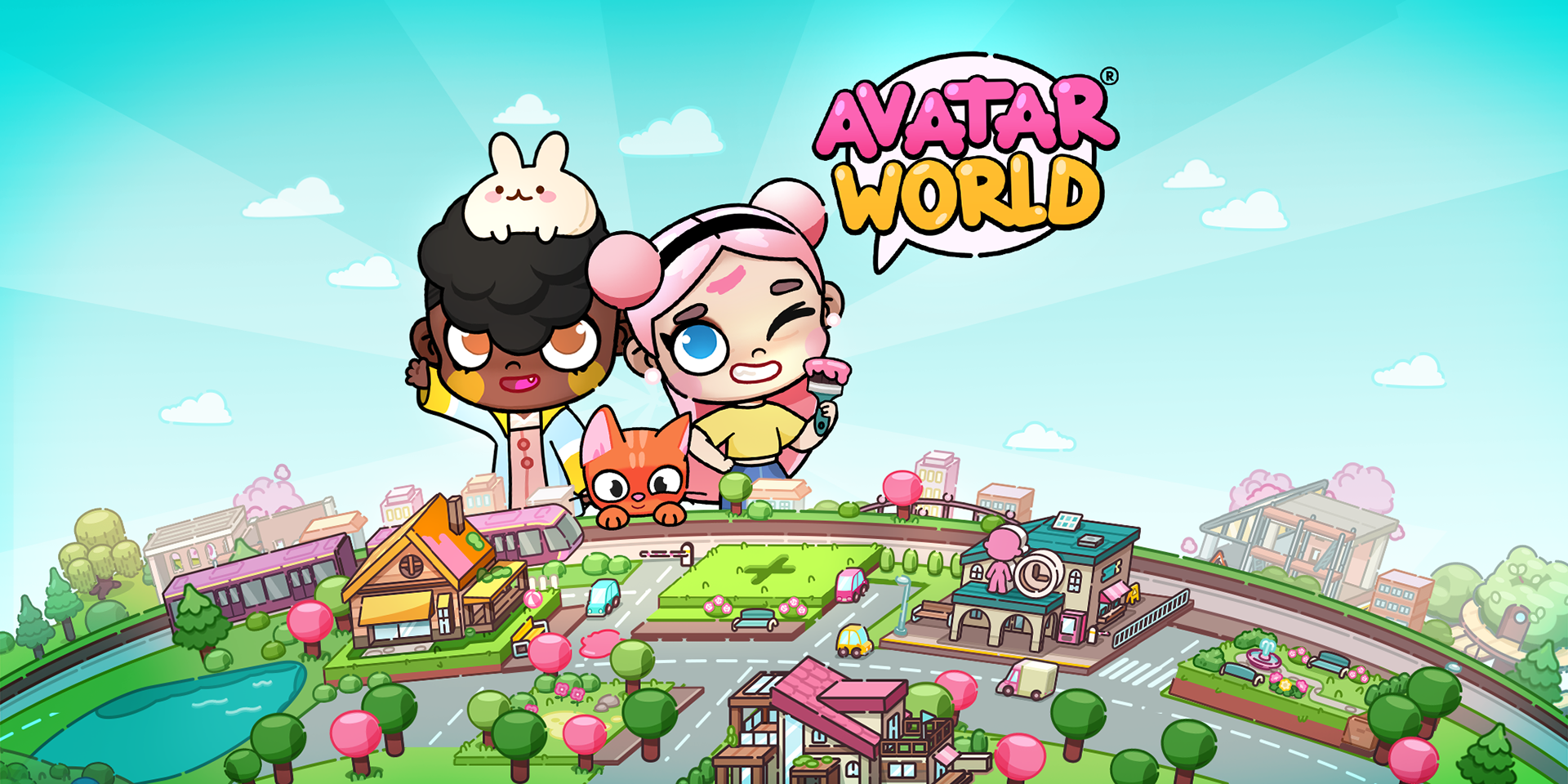
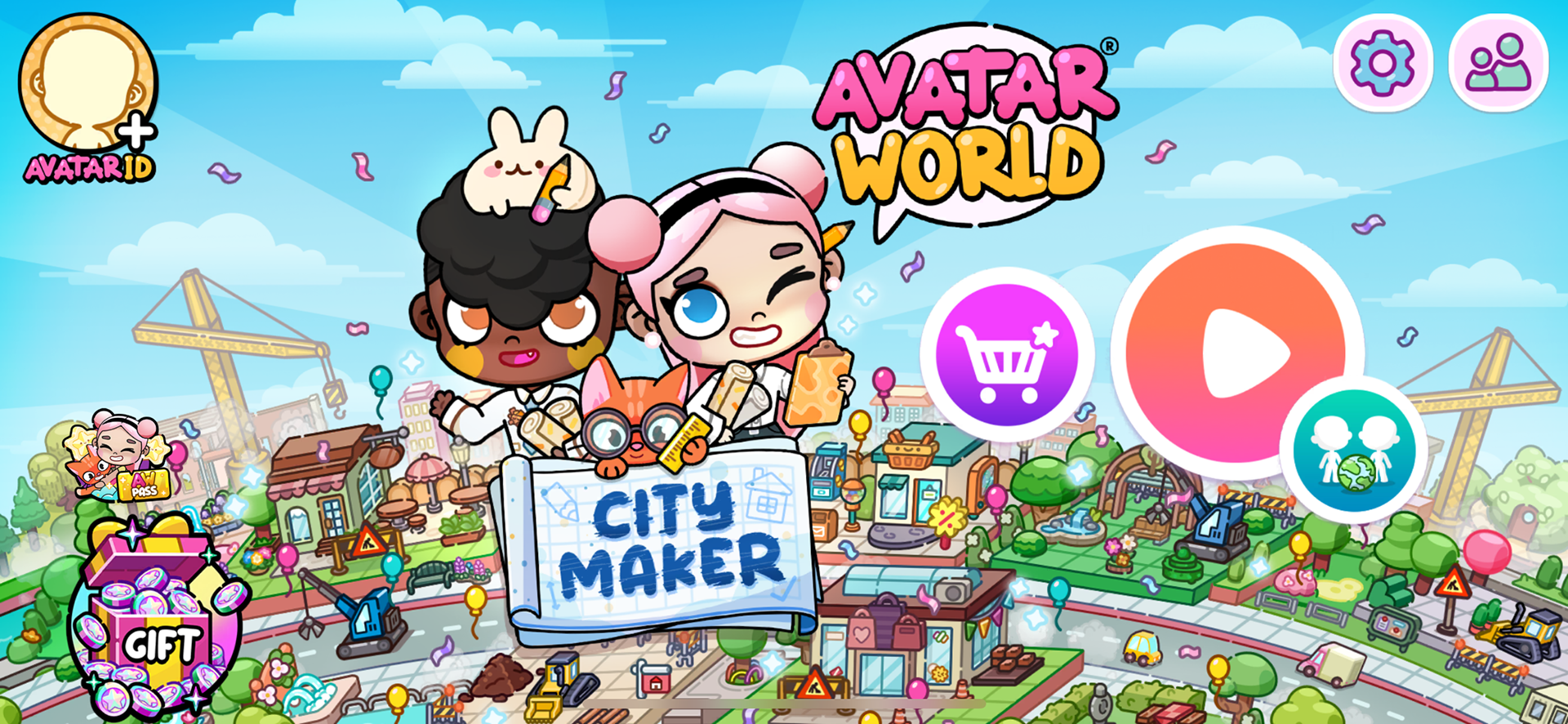
Avatar World is a successful creativity-driven mobile game built on exploration, self-expression and open-ended play, serving as a storytelling and pretend-play platform for millions of kids worldwide.
MY ROLE & OWNERSHIP
As the Executive Art Director and Head of Art & Design, and as the original hands-on creator of the IP’s visual language across characters, environments, and UI, I defined its core visual identity, built and scaled creative systems, and guided its evolution into a cohesive, scalable IP with a unified vision across teams and production streams.
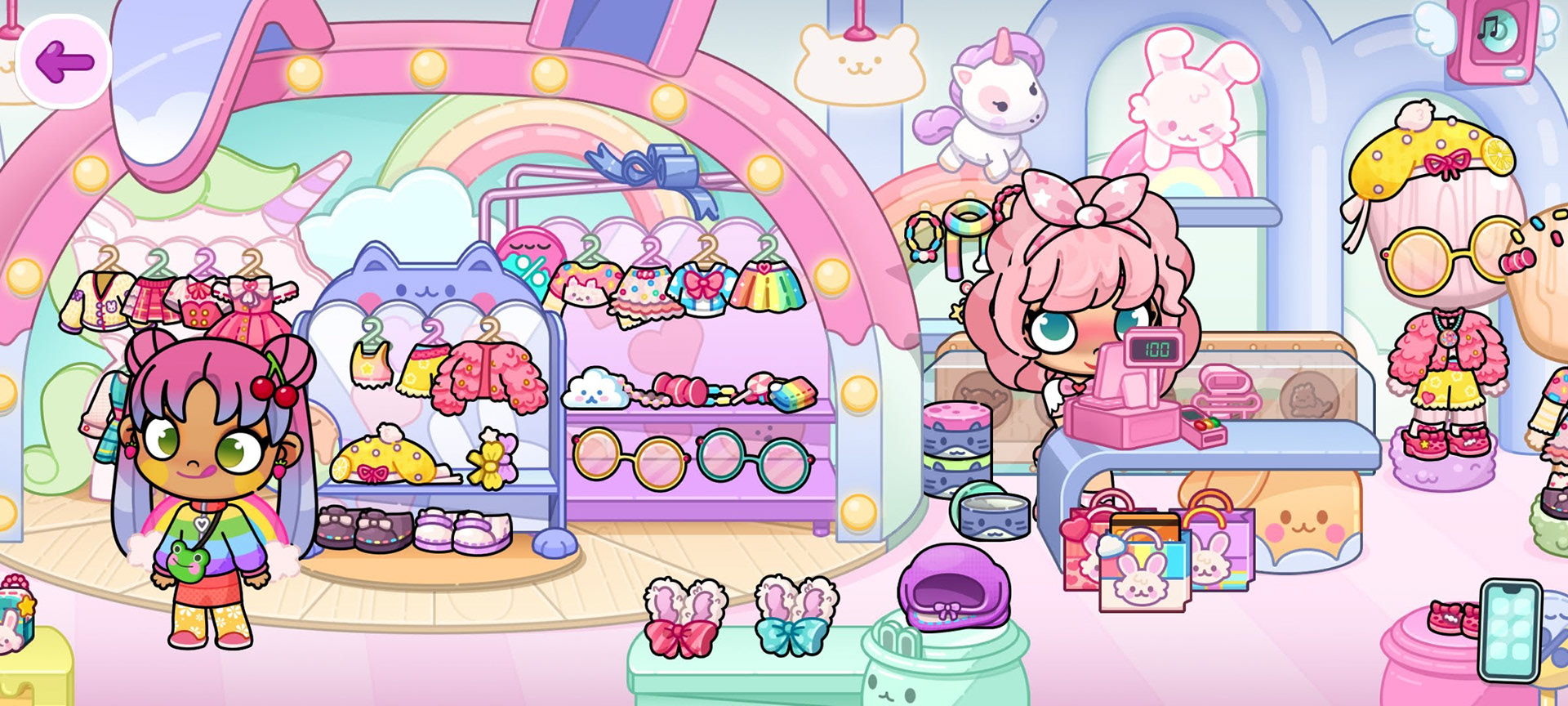
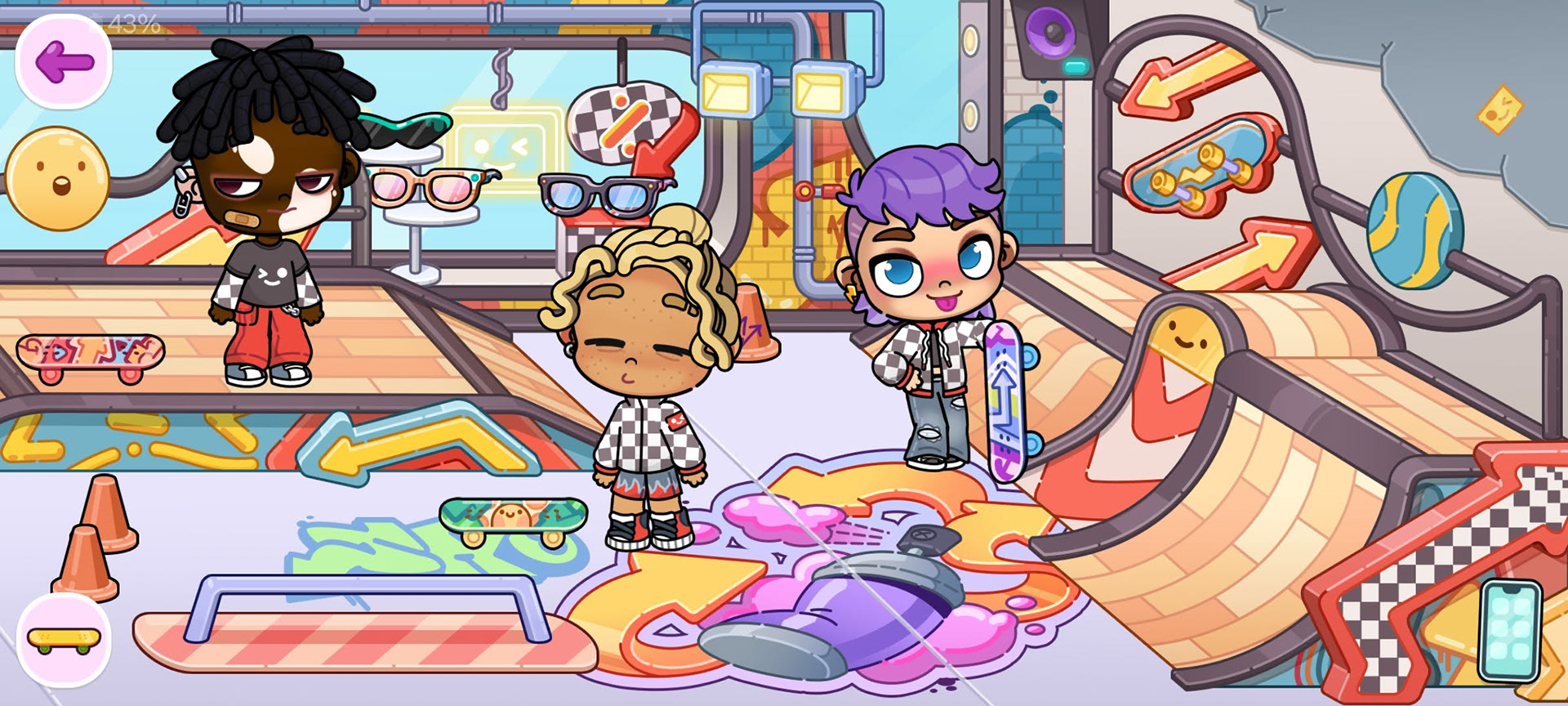
CREATIVE PHILOSOPHY and DESIGN LOGIC
My creative approach to Avatar World began with a quest to understand our players’ true motivations: what emotional experience the game could meaningfully offer its young audience.
I didn’t have to look far - I was designing for the player-child I once was. Inspired by my own childhood memories of worlds bursting with life and possibility - through toys, films, and real-life environments - I embraced maximalism as a guiding aesthetic principle: a visual experience of unapologetic abundance, detail, and endless interest, designed to evoke that same sense of awe and discovery.
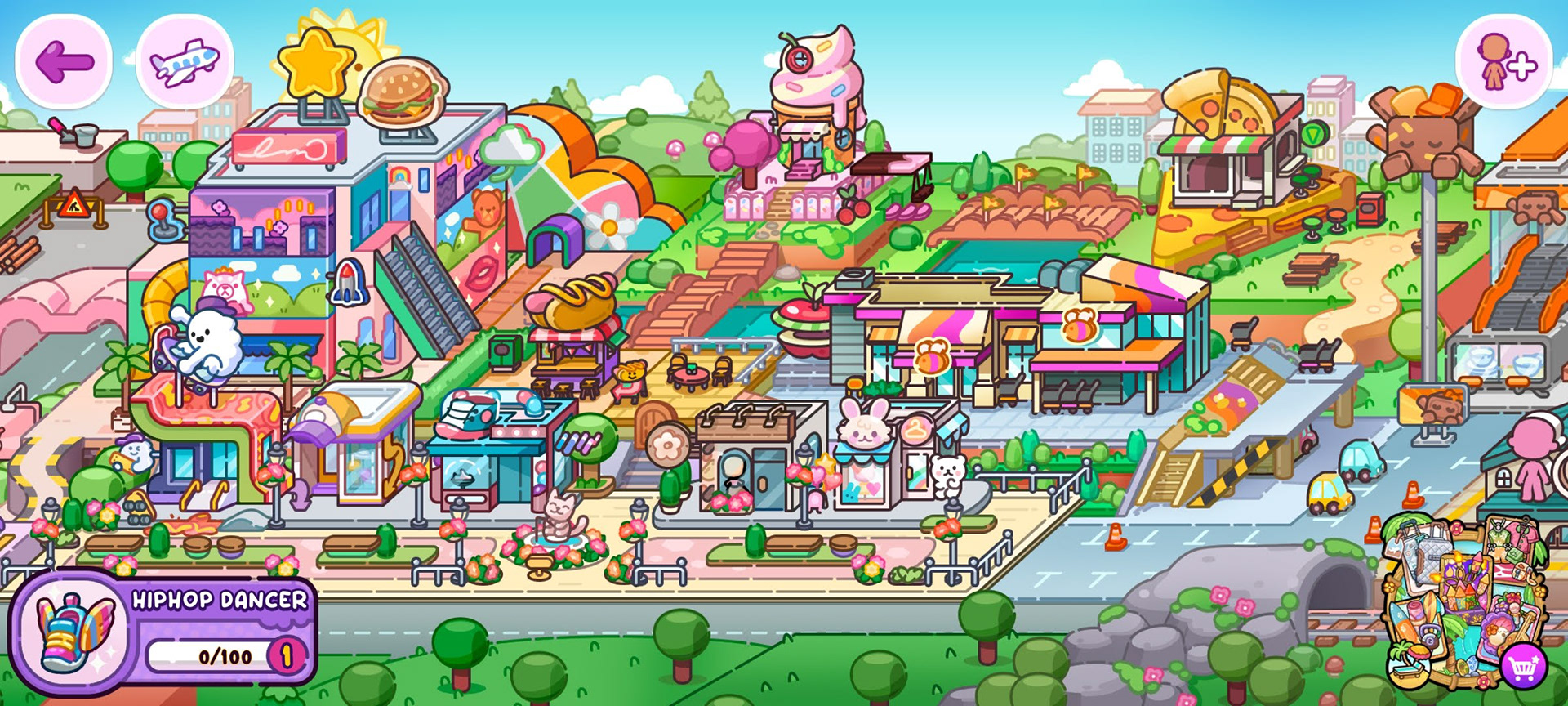
In my mind, Avatar World would function both as an immersive reflection of everyday, familiar life - a stage for pretend play with real emotional value for players - and as a palm-sized miniature world shaped for the mobile canvas, designed to capture the tactile warmth of a toy. Informed by my lifelong fascination with miniature worlds, toys, and tiny spaces, I approached the game through a toy-first perspective that defined how I shaped the world.Those instincts translated into clear principles that guided character design, visual flow, level and map composition, color language, rendering style and UI/UX decisions - ultimately forming the visual DNA of the IP.
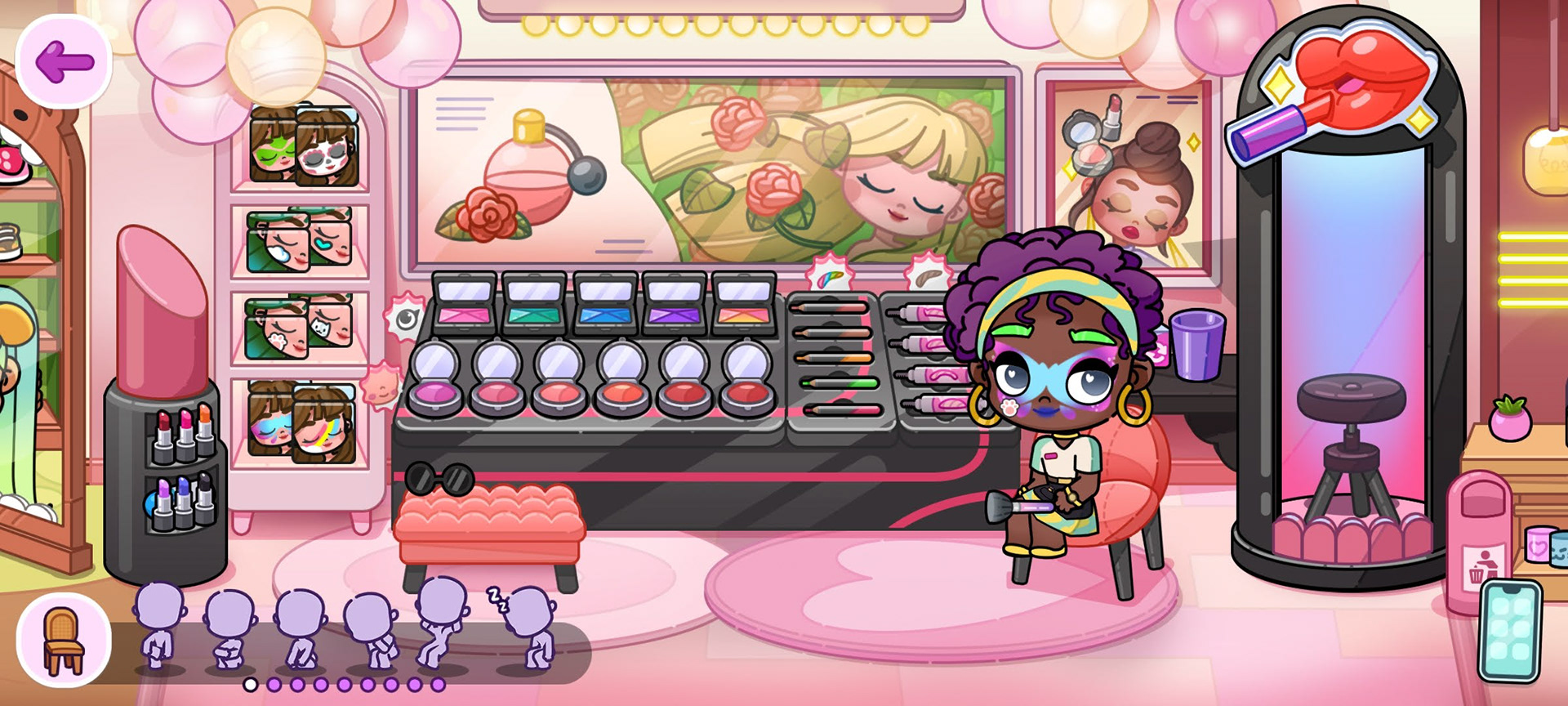
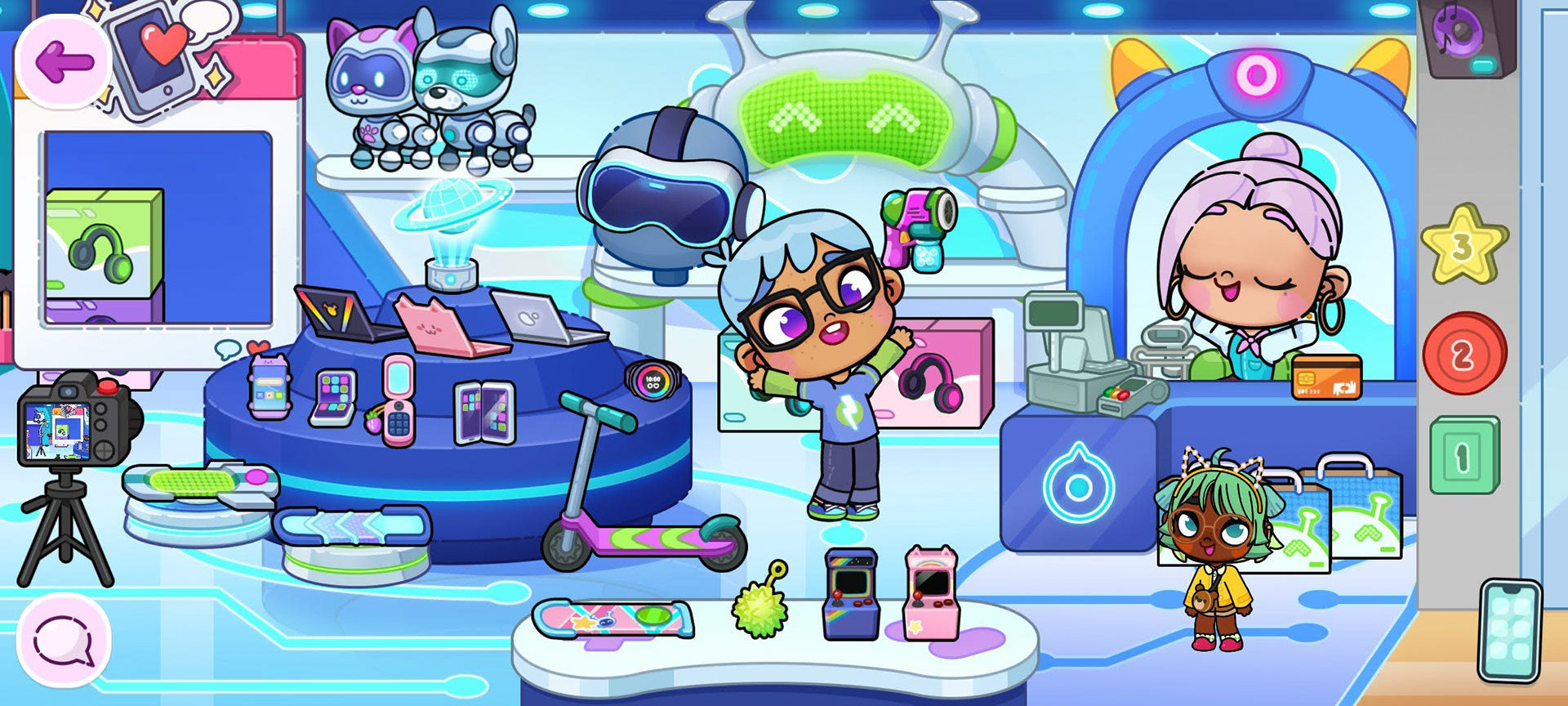
CORE CHALLENGES
These challenges reflect the direction and standards I defined in shaping the long-term visual identity of the IP, alongside structural needs that emerged as the product and team evolved.
1
Establishing a globally recognizable and original visual language
Creating a distinct aesthetic signature that felt instantly identifiable and differentiated within a crowded global market.
2
Designing a cross-cultural art style that is contemporary yet timeless
Balancing modern kids’ culture with long-term durability, shaping a visual language that feels cute, expressive and internationally appealing without being tied to a specific genre.
3
Architecting the artistic-technical foundations of the world
Defining a unified perspective system and modular structural rules that support gameplay and anchor the visual logic of characters, environments and levels - built for endless expansion and vast team collaboration.
4
Designing for Continuous Expansion in a Live World
Avatar World is a live, ever-expanding universe with millions of kids expecting very frequent content updates. The visual system needed to stay coherent under rapid production cycles while supporting meaningful thematic variety.5
Ensuring consistency across thousands of assets
As scope and team size grew, maintaining alignment, preventing stylistic drift and embedding the visual DNA across parallel production streams became a major challenge.
6
Creating a scalable foundation for future IP expansion
The visual DNA needed to support not only the current product but also future extensions into new themes, experiences and potential physical products.
SOLUTIONS and CREATIVE PRINCIPLES
1
Visual DNA: Defining the Core Aesthetic Principles
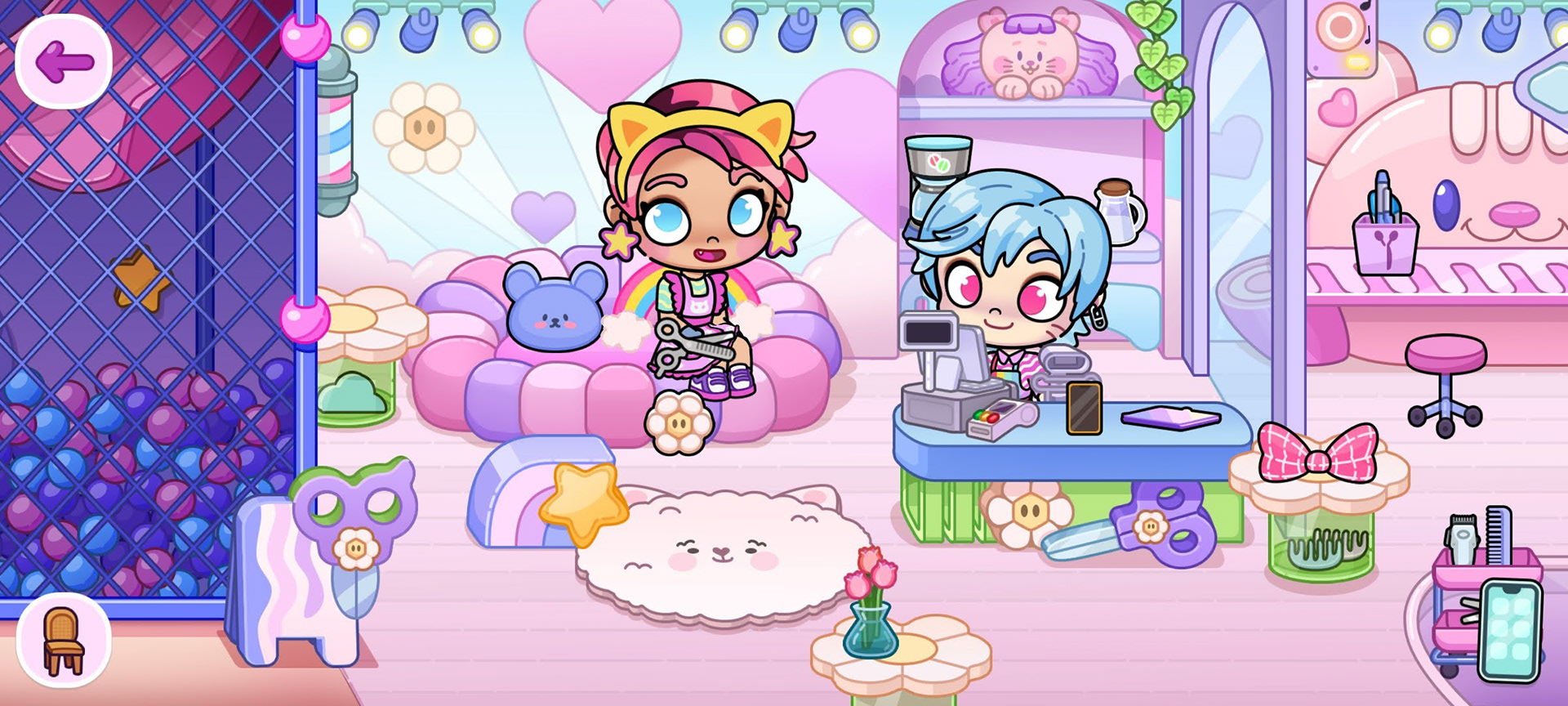
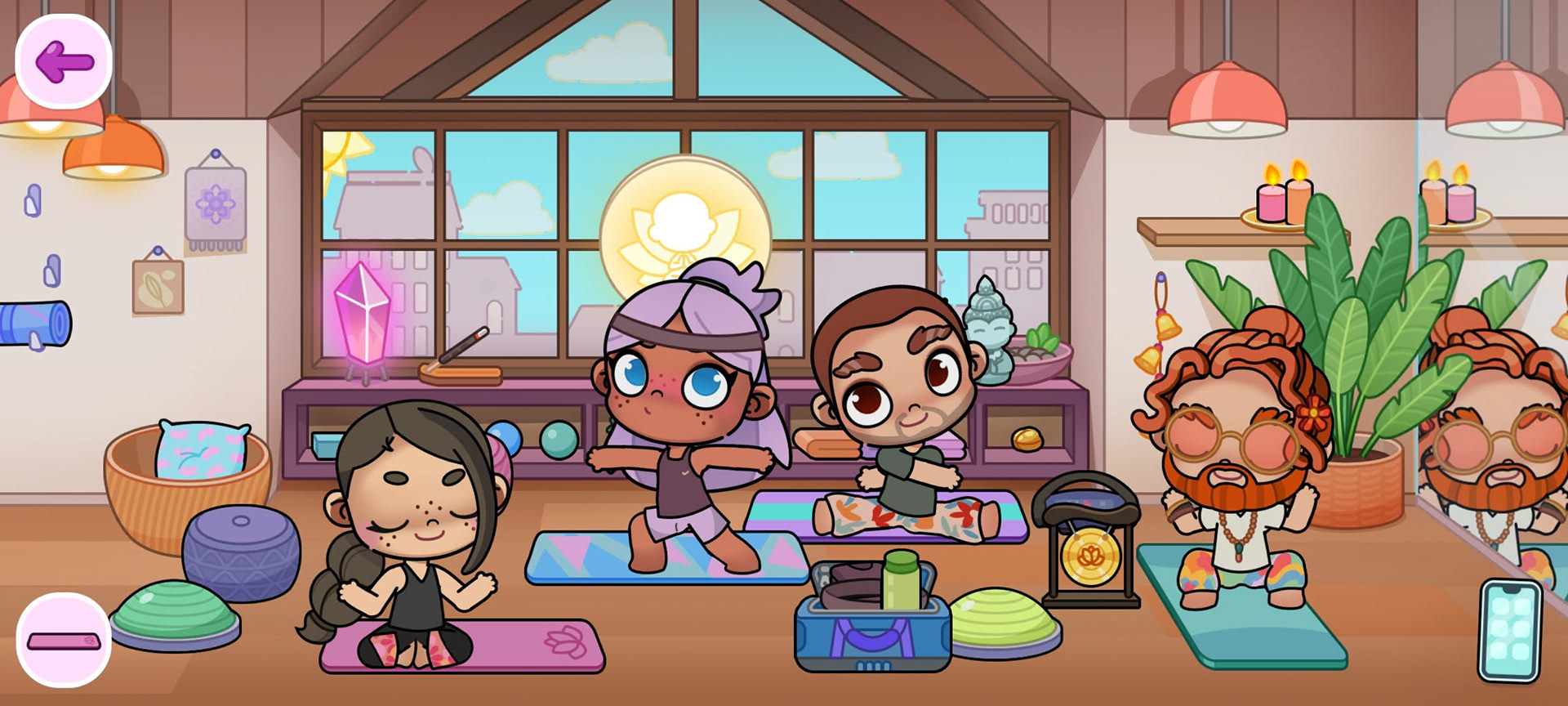
To shape a cohesive and scalable visual identity for Avatar World, I developed a set of aesthetic principles that guided key decisions across characters, environments and levels:
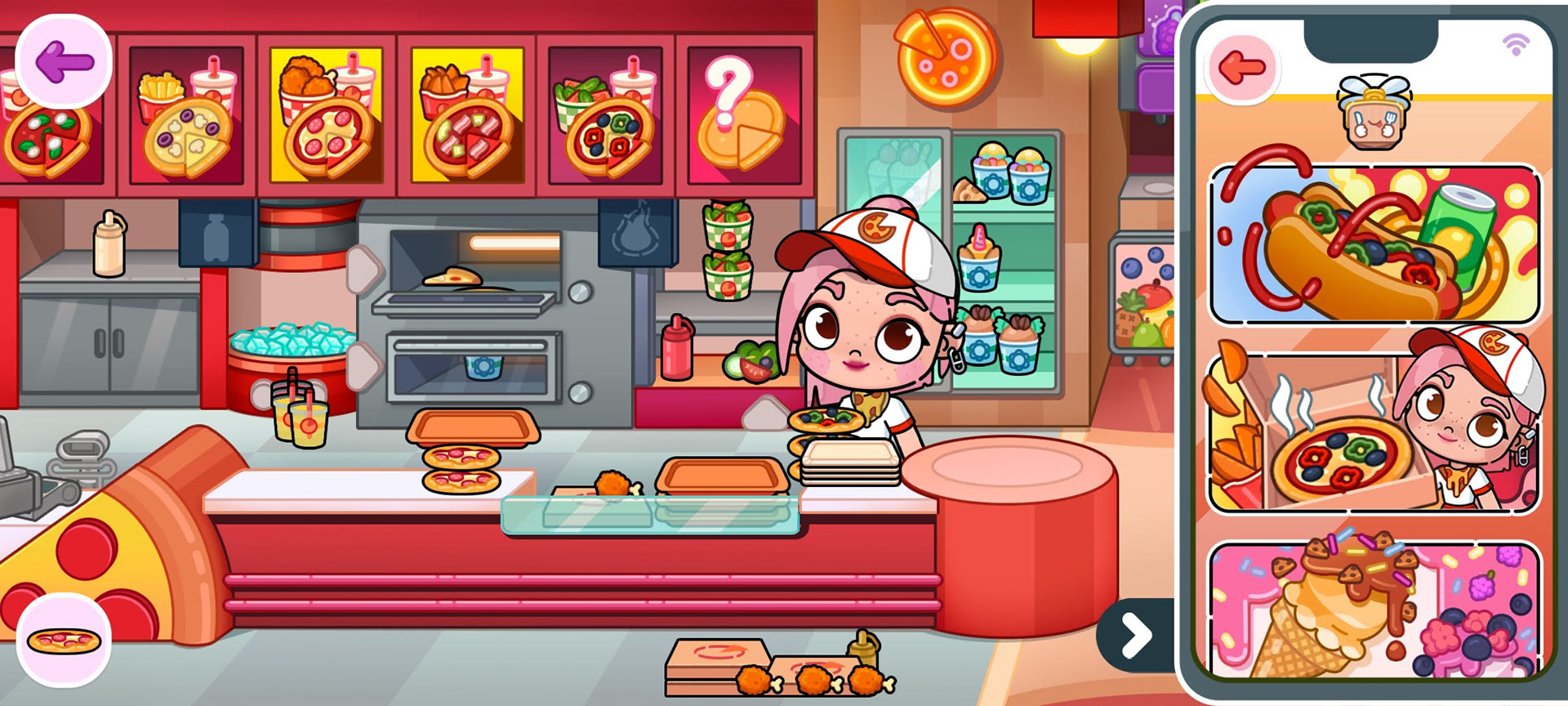
• Maximalism as a core value and guiding aesthetic principle - creating a visual world of abundance, richness, and endless discovery.
• A rounded, soft shape language that touches kawaii influences without belonging to any specific genre• High-detail density that feels lively and packed but has it's internal logic and harmony
• An intentional alignment with contemporary kids’ trends and global pop culture, offering relevance while balancing timelessness with classic themes and motifs
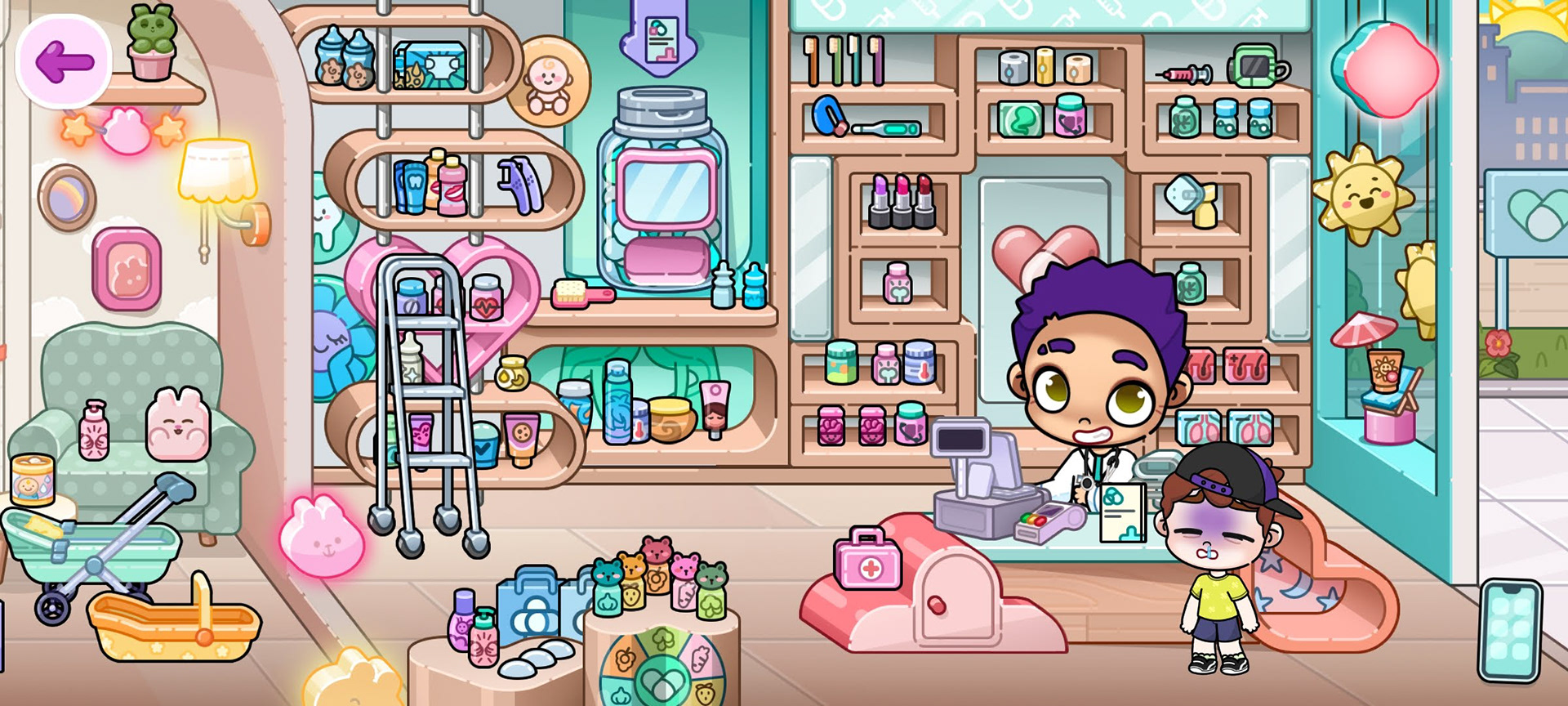
• A layered color philosophy built on distinct palettes for each level and screen, maintaining internal harmony and also cohesive integration across the entire world
• A blend of everyday realism and familiarity with a subtle cuteness filter for life
• A continuous emphasis on warmth, softness and emotional approachability
These foundational principles became the visual signature of Avatar World
2
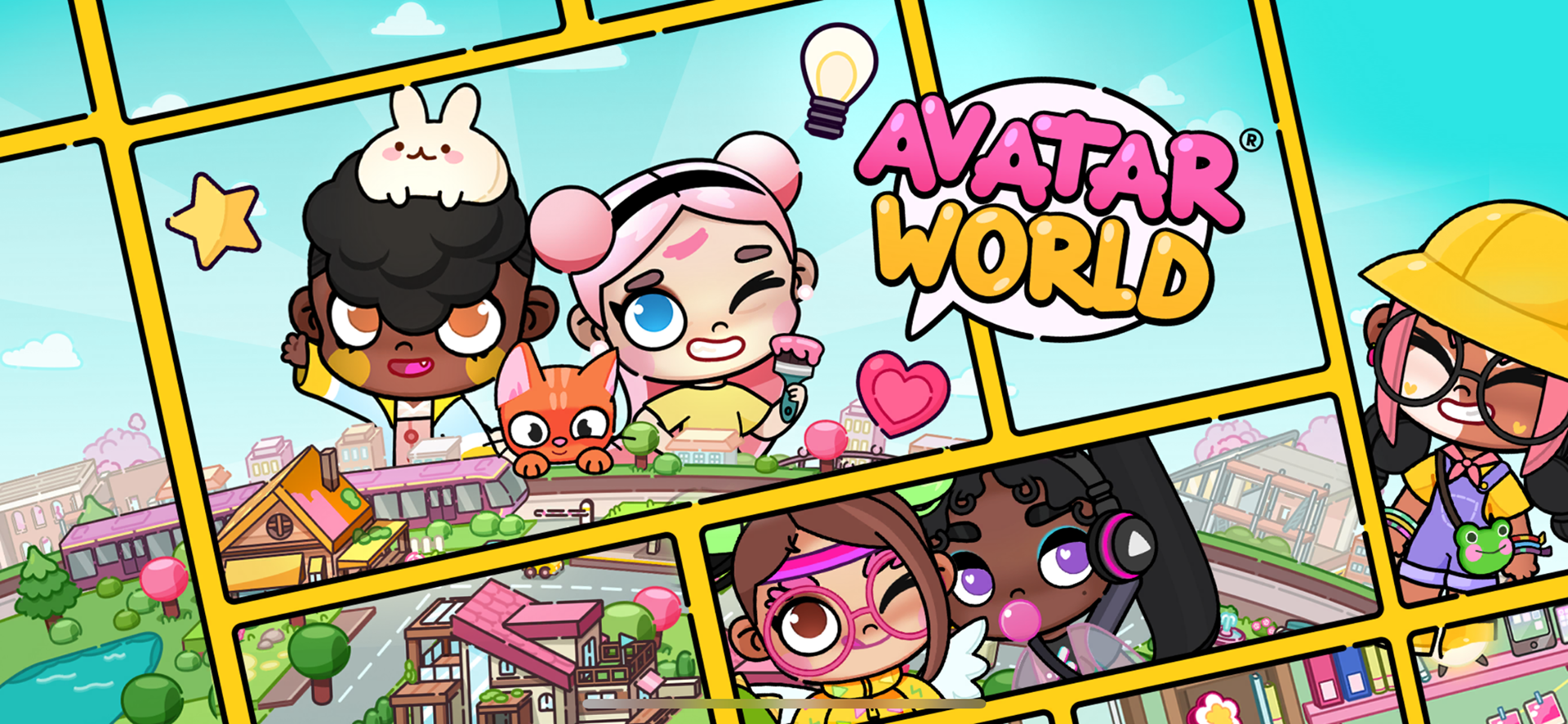
Character Design and System: Expressive, Modular, Lovable
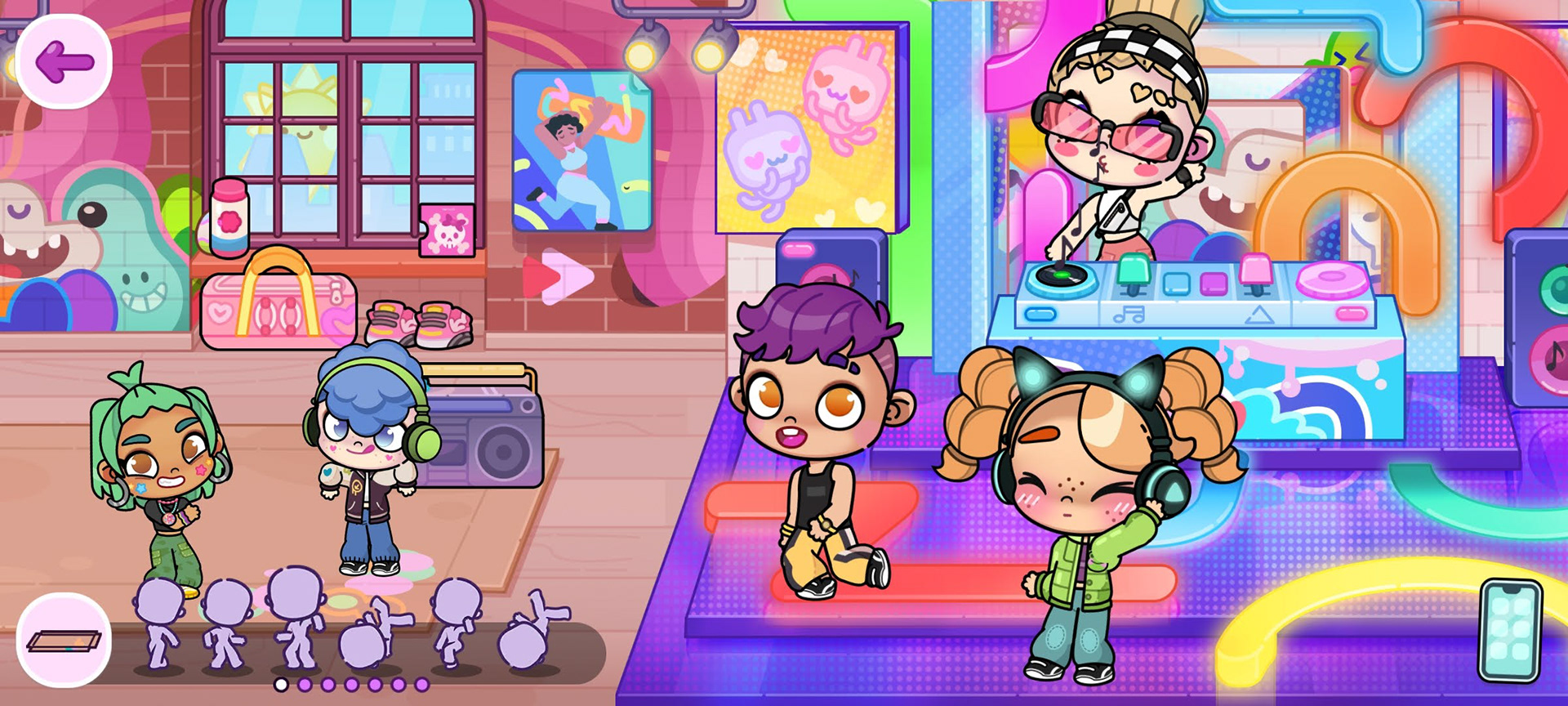
I designed the characters to balance appeal, clarity and deep modularity - essential in a game where customization is a central player motivation.
Key principles included:
• A subtle ¾ pose providing volume and readability while preserving the charm of a 2D character
• The pose is tailored for customization with large readable surface areas for outfits and interchangeable assets
• A strong foundation for animation, maintaining silhouette clarity and outfit readability across walking, gestures and expressive motions
• A rounded, curved shape language supporting variation and silluette expresion without losing the core DNA
• A layered system of facial features, hairstyles and skin tones enabling broad inclusiveness and representation•
• The system enables deep modularity, allowing thousands of combinations without stylistic drift
This system created a character that is instantly lovable, effortlessly readable and endlessly customizable - the emotional and visual heart of Avatar World.
3
A Scalable Spatial and Visual System for a Mobile World
Designing for a horizontally scrolling mobile canvas required a system-level approach. I developed a modular spatial framework in which perspective logic and rendering language work as one - enabling depth, clarity, and intuitive navigation through a cohesive 2.5D approach to both spatial structure and visual expression.
Key principles included:• Unified perspective logic - A consistent horizon line and camera height were defined, along with a controlled depth range for each scene. This enabled a true perspective illusion while allowing the game mechanics to operate with visual smoothness. Each item type was assigned its own characteristics such as angle and view - allowing a sophisticated illusion to function cohesively across playables, background and characters.
• Modular spatial structure - A clear rule-set allowed environments to expand and recombine while preserving visual cohesion and spatial readability at scale.
• 2.5D illusion of space - A controlled illusion of depth and openness designed specifically for a horizontally scrolling frame, balancing flat readability with spatial richness.
• Hybrid rendering approach - A rendering style blending vector clarity with subtle 2.5D highlights, shadows, and material depth - adding richness and dimension while preserving charm and clarity.
• Team guidelines and rule systems - A unified framework of visual and structural rules was established and communicated across the team, supporting cross-team collaboration, consistency, and efficient production at scale.
• Iterative system evolution - A collaborative, ongoing process in which multiple teams continuously refined spatial rules and visual guidelines, allowing the system to adapt, mature, and scale without losing coherence.This spatial system anchored the visual logic of the entire world, enabling dozens of levels to grow consistently while remaining expressive, playful and easy to navigate.
4
World and Level Composition: Crafting Emotionally Driven Play-Spaces
Working with the teams, I approached each level and each world map as its own micro-identity within the broader art system, solving for both variety and long-term cohesion. Environments were designed not only to be visually rich and readable, but to invite touch, exploration, and playful interaction - encouraging curiosity, experimentation, and even moments of joyful mess-making, while maintaining clarity and compositional control.
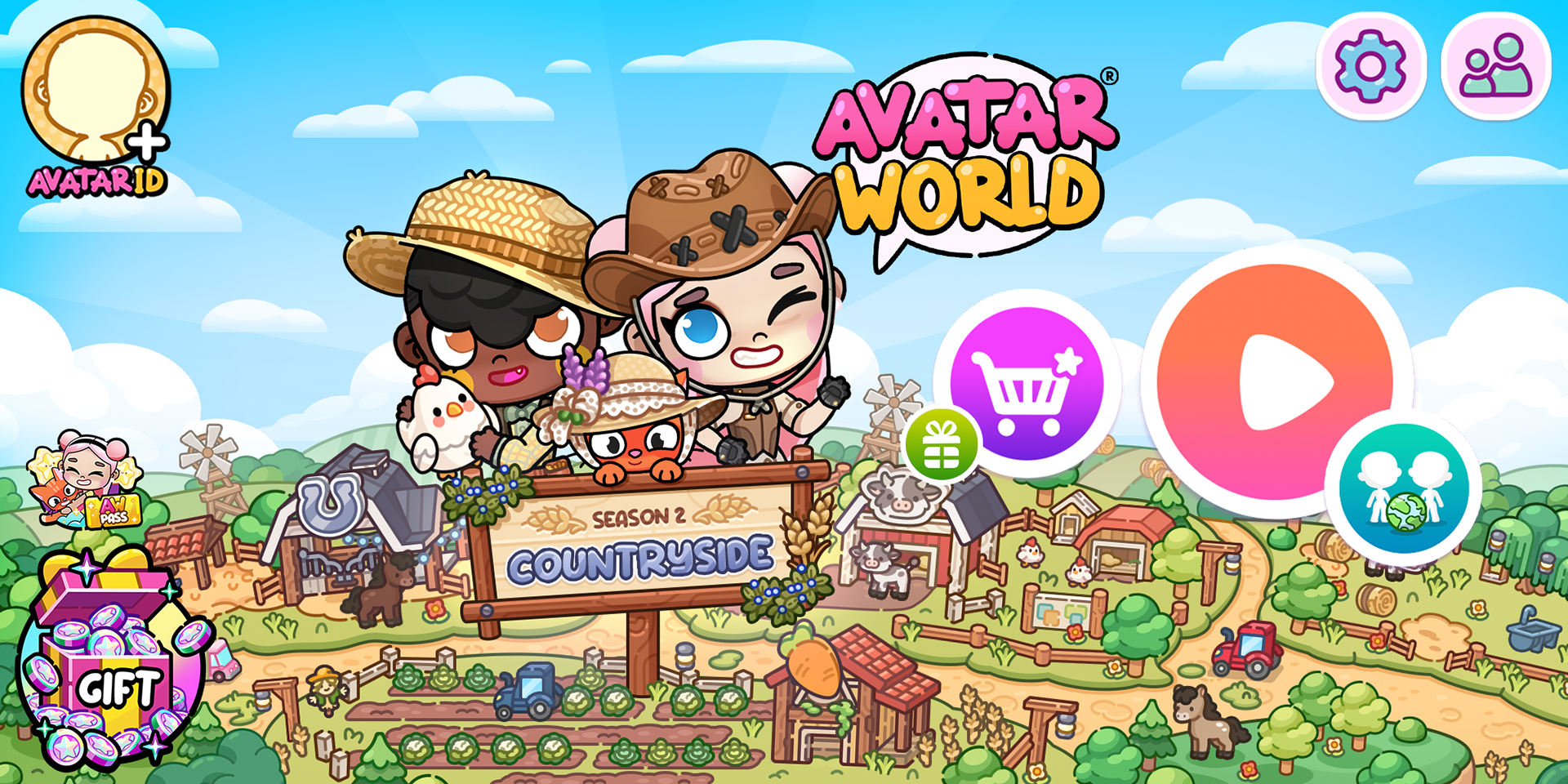
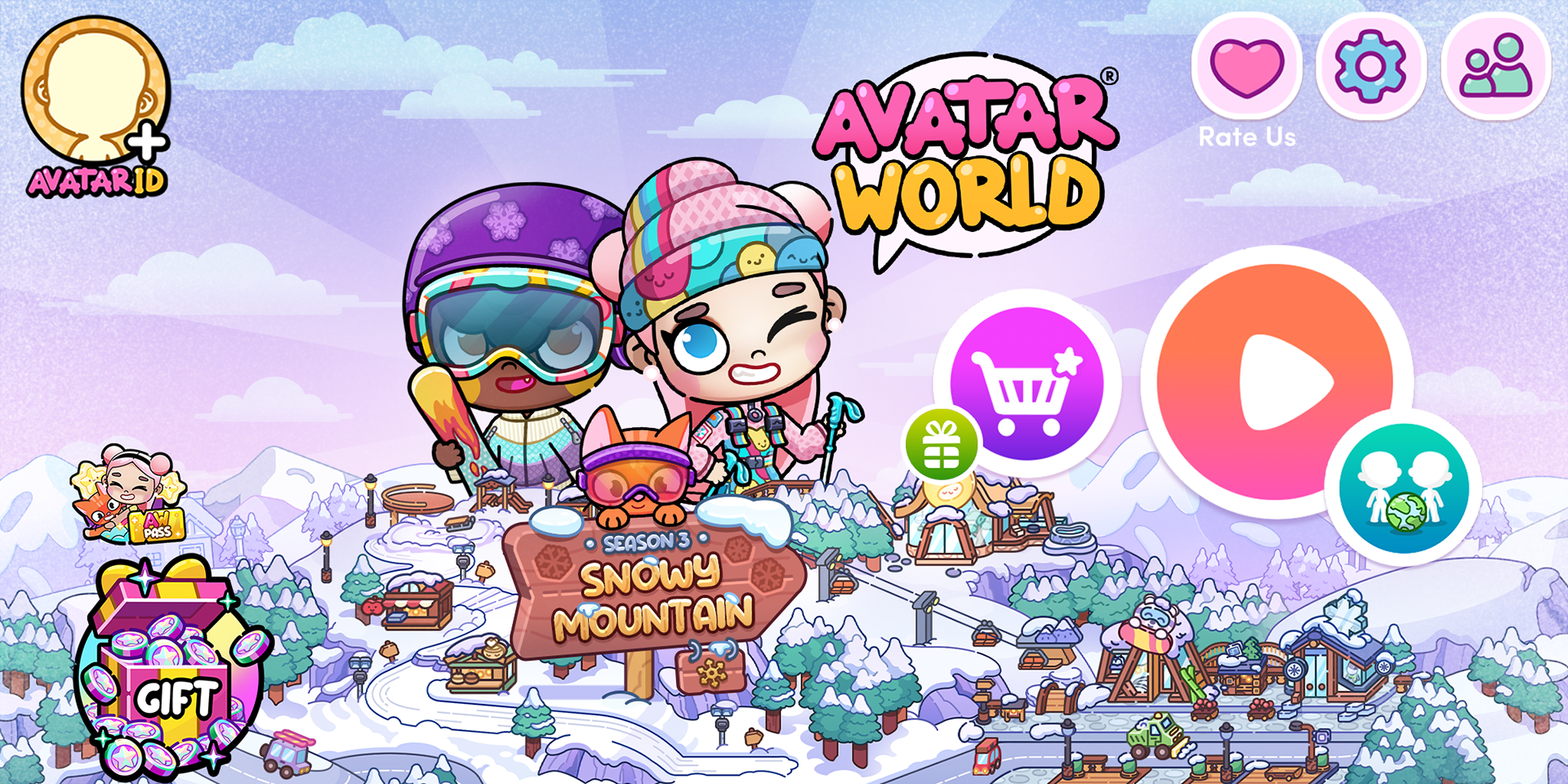
• Distinct motif and shape families that give each level and world map its own micro-language and identity, almost like a mini-brand within the world
• Color hierarchies that support intuitive navigation and emotional tone
• Dynamic compositions balancing dense detail with open breathing zones
• Guided visual flow using compositional contrast, rhythm and vertical-horizontal balance - supporting intuitive exploration within a horizontally scrolled mobile frame
• Gameplay-oriented visual decisions defining clear activity zones and supporting game-design intent through spatial clarity and readable composition
• A meticulous, detail-oriented craft approach applied to all environments and props - with thoughtful material treatment, refined rendering and attention to the smallest items and to each corner of the composition
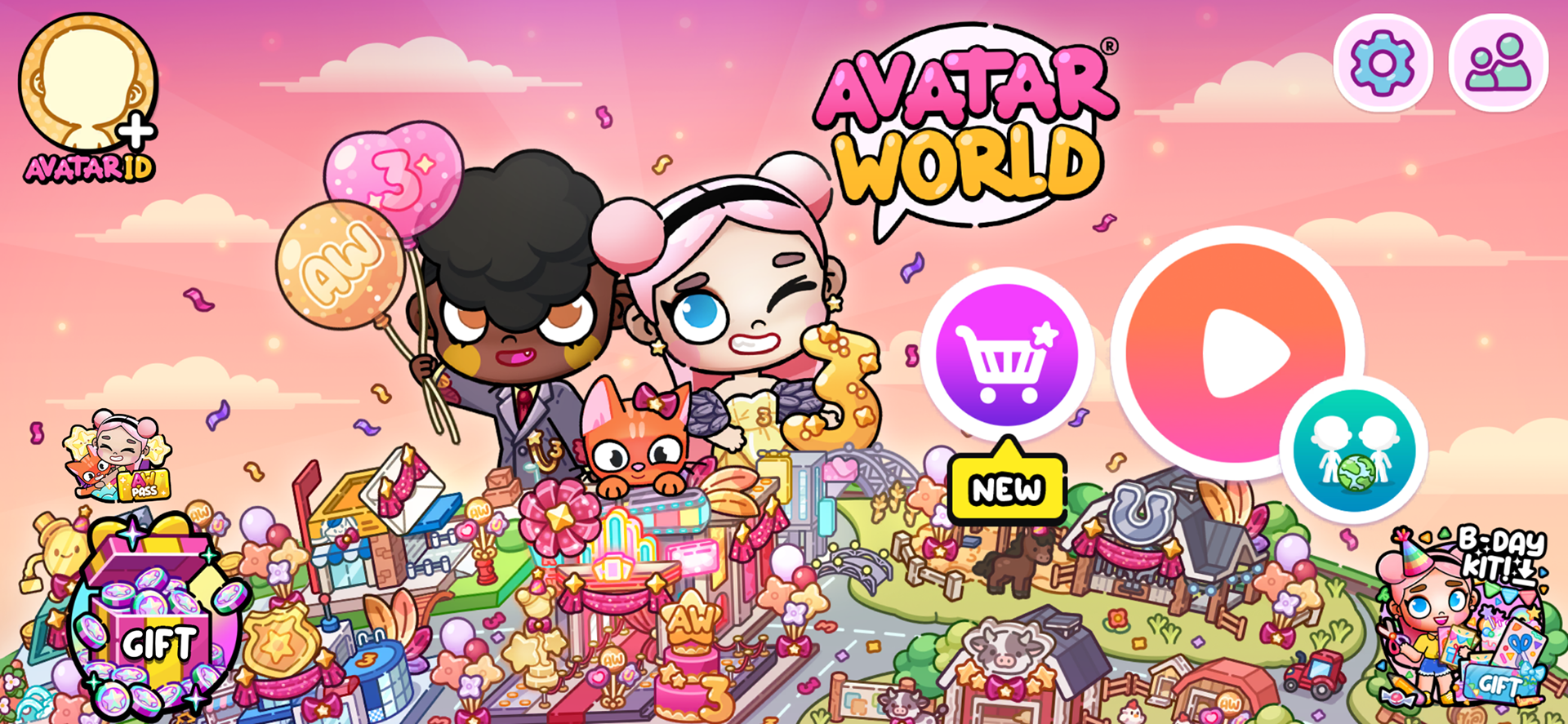
• World maps as atmospheric entry points, each introducing a distinct visual mood and color language that sets the tone for the environments within it - from snowy mountains to bustling cities or tropical islands
• The main world map as a miniature world, designed as a rich, lived-in cityscape that echoes real-world logic while introducing its own playful rules, using layered elevations, stairs, bridges, and interconnected paths to create a tangible sense of scale, continuity, and toy-like exploration
This approach ensured that each environment felt inviting, story-ready and emotionally resonant, while still belonging unmistakably to the same universe.
5
System-level Creative Leadership at Scale
As Avatar World scaled into a live, continuously expanding IP, creative direction alone was no longer sufficient. Sustaining quality, speed, and cohesion required adaptable production pipelines, clear organizational structure, and a shared creative operating model across a growing, distributed art & design organization. From the outset, I approached creative leadership systemically - designing not only visual frameworks, but the operational, organizational, and cultural systems required to support long-term scale.
Key systems included:
• Company- and product-DNA-tailored approach and deep, analysis-based systems design
From the early establishment stage, building the creative and organizational infrastructure from the ground up through the product’s mature, scaled phase, I viewed company and product specificity as a core leadership principle. Rather than importing best practices wholesale or imposing generic methodologies - organizational structures, workflows, and creative systems were designed for fit - shaped directly by the product’s DNA, constraints, and evolving needs.
Decisions were grounded in continuous analysis of growing production demands and the expanding scope of operations, enabling sustained, high-level creative performance at scale.
Decisions were grounded in continuous analysis of growing production demands and the expanding scope of operations, enabling sustained, high-level creative performance at scale.
• Continuous pipeline optimization and adaptation
An ever-adapting, optimization-driven approach. As an intensely live product, Avatar World required management systems that could evolve alongside it. Workflows, tools, and production pipelines were continuously refined and expanded.
• Frameworks for alignment and collaboration – internal and cross-functional
Pipelines enabled synchronization within teams, across the art and design organization, and outward to adjacent disciplines. Collaboration models between art and design and partner teams were actively shaped to align workflows, handoffs, and expectations across the full production lifecycle - supporting parallel execution, shared accountability, and smoother decision-making.
• Solid creative and operational ground in a sea of change
Operating in a fast-paced, startup-state-of-mind environment with short release cycles and diverse initiative types, the art and design organization maintained a solid creative and operational foundation despite constant change. Clear work pipelines, routines, and core operating pillars equipped the department to adapt quickly, take on a wide range of challenges, and sustain stability, clarity, and high-level performance within a continuously shifting production context.
• Shared mission, vision, and ownership through a transparent approach
The department leadership was unified around clear messages, communicating a shared mission statement and collective ownership of the game’s visual execution.
Management routines, communication rhythms, and cross-lead collaboration practices were guided by transparency, cultivating shared ownership and personal accountability, and fostering trust and a shared sense of purpose across a distributed international team, particularly during periods of change.
Management routines, communication rhythms, and cross-lead collaboration practices were guided by transparency, cultivating shared ownership and personal accountability, and fostering trust and a shared sense of purpose across a distributed international team, particularly during periods of change.
• Strong, collaborative, and unified middle leadership
I worked closely with the art and design management layer - including producers, art leads, department heads, and HR partners - to build an empowered and unified leadership level, with a strong emphasis on collective leadership.
This leadership structure enabled teams to operate smoothly day to day, maintain consistently high creative standards, and stay focused on their craft, while supporting reliable production and execution at scale.
This leadership structure enabled teams to operate smoothly day to day, maintain consistently high creative standards, and stay focused on their craft, while supporting reliable production and execution at scale.
• Clear, initiative- and GM-facilitated executive-level decision-making
From early-stage development through mature, ongoing operations - structured simulations, forecasting, and facilitated decision-making processes enabled founders and leadership to navigate multi-track decisions with clarity. This approach emphasized transparency, alignment, and shared ownership across executive-level decision-making.
• Talent frameworks and team scaling
Structured recruitment, candidate evaluation, and onboarding frameworks supported consistent team growth across art and design roles, grounded in clear role definitions and expectations. This approach accelerated integration into the visual language, workflows, and collaborative culture of the organization.
• Creative decision-making under scale, time and budget constrains
Ongoing trade-offs between speed, quality, and creative depth were addressed through clear decision-making frameworks, defining when to standardize, when to allow divergence, and when to intervene to protect the long-term integrity and coherence of the IP.
These systems enabled the art and design organization to operate as one cohesive creative unit - supporting long-term scale, adaptability, and high-quality output over years of live production and continuous evolution, while preserving the integrity of the visual identity and empowering teams to work with confidence and ownership.
Personal Note
Building and leading the art organization for Avatar World has been one of the most meaningful aspects of my work. I see my role as holding the vision through hands-on art direction, meaningful mentorship and by connecting people: creating the conditions for individual strengths to come together into a cohesive whole.
I believe strong art direction is rooted in trust, clarity, and generosity: recognizing each person’s unique contribution, giving them space to grow, and aligning those voices around a shared creative direction. The team that grew around this world continuously elevated the craft and vision beyond what any single individual could achieve alone.
We continue to navigate technical, creative and operational challenges together, learning from one another and evolving as the world evolves. I remain deeply proud of the team, grateful for their talent and curiosity, and committed to growing alongside them as we continue shaping Avatar World.
IMPACT
The visual identity and creative systems behind Avatar World had a meaningful impact on how players discovered, understood and emotionally connected with the product.
1
Early visibility driven by visual appeal
The distinct visual identity helped the game gain strong early visibility and attract players through its aesthetic appeal, playing a key role in early discovery and lasting player interest.
2
A naturally viral art style
The clarity of the characters and the appeal of the world allowed Avatar World to stand out immediately among neighboring titles, capturing attention in a crowded marketplace. The visual language itself encouraged curiosity, exploration, and player-to-player sharing, turning visual appeal into an organic driver of discovery and spread.
3
Visual identity as a key competitive differentiator
Players and community creators repeatedly highlighted the game’s visual quality as one of the primary factors in their attraction to and enjoyment of Avatar World, and as a meaningful consideration when choosing it over competing titles. The game’s immediate, early stage appeal-driven pull revealed a clear unmet demand in the market for the type of visual experience Avatar World offered at the time.
4
Strong creator adoption
Kids and community creators adopted the art style as a basis for their own creative expression, producing and sharing characters, scenes, and stories across social platforms. The visual language proved highly transferable to user-generated content, supporting organic sharing and extending the game’s presence beyond the product itself.
5
Brand affinity and emotional recognition
The cohesive aesthetic helped build a strong emotional bond with players over time. Across years of live releases, kids repeatedly expressed excitement around the visual appeal, while community creators consistently pointed to the art style as a distinguishing factor compared to similar titles. This sustained response reinforced the IP’s long-term appeal and deepened its emotional connection with its audience.
6
A stable foundation for continued growth
The strength of the visual identity and the scalable creative systems enabled the world to expand rapidly while maintaining consistency, supporting the game’s evolution into a multi-theme, multi-category universe.
7
A creative organization capable of independent, adaptive growth
The systems and structures that were established allowed the art organization to operate efficiently and autonomously, taking on new creative challenges across emerging areas while maintaining cohesion and quality. The team developed the ability to interpret, evolve and extend the visual DNA into new domains, supported by clear principles, cross-disciplinary alignment and scalable creative infrastructure.
In practice, the visual direction shaped not only how the game looked - but how it spread, how the team worked and evolved, and how players formed a lasting connection with its world.
Disclaimer: Screenshots shown here were captured from the publicly available version of Avatar World by Pazu Games Ltd. They are displayed solely to illustrate my role as the game’s Art Director and to showcase professional experience. All visual assets and intellectual property belong exclusively to Pazu Games Ltd (©). Art Direction and Visual Development by G.L.